On an island, or at the end of a long valley road, the hardest part of a journey is often the last hour. The long-haul flight is the airline's business; the stretch from the arrivals hall to your room is yours, unless the hotel takes it on. Where there is no taxi rank, no bridge and no evening ferry, the hotel's own transfer is not a luxury but the only sensible way in. Yet the phrase covers anything from a boat crewed by the hotel's own staff to the phone number of a driver nobody at reception has met.
Why the last leg matters most
Remote places are remote because getting there is awkward. A small island may have no public boat at the hour you land, a mountain road may close in bad weather, and a taxi driver may not know where a lodge at the end of a track is. A hotel that handles the journey knows the tides, the timetable and the road, and it knows you are coming. That knowledge counts most when something goes wrong, and on a long itinerary that is often the flight before. If an island hotel cannot tell you in two sentences how you will get there, keep looking.
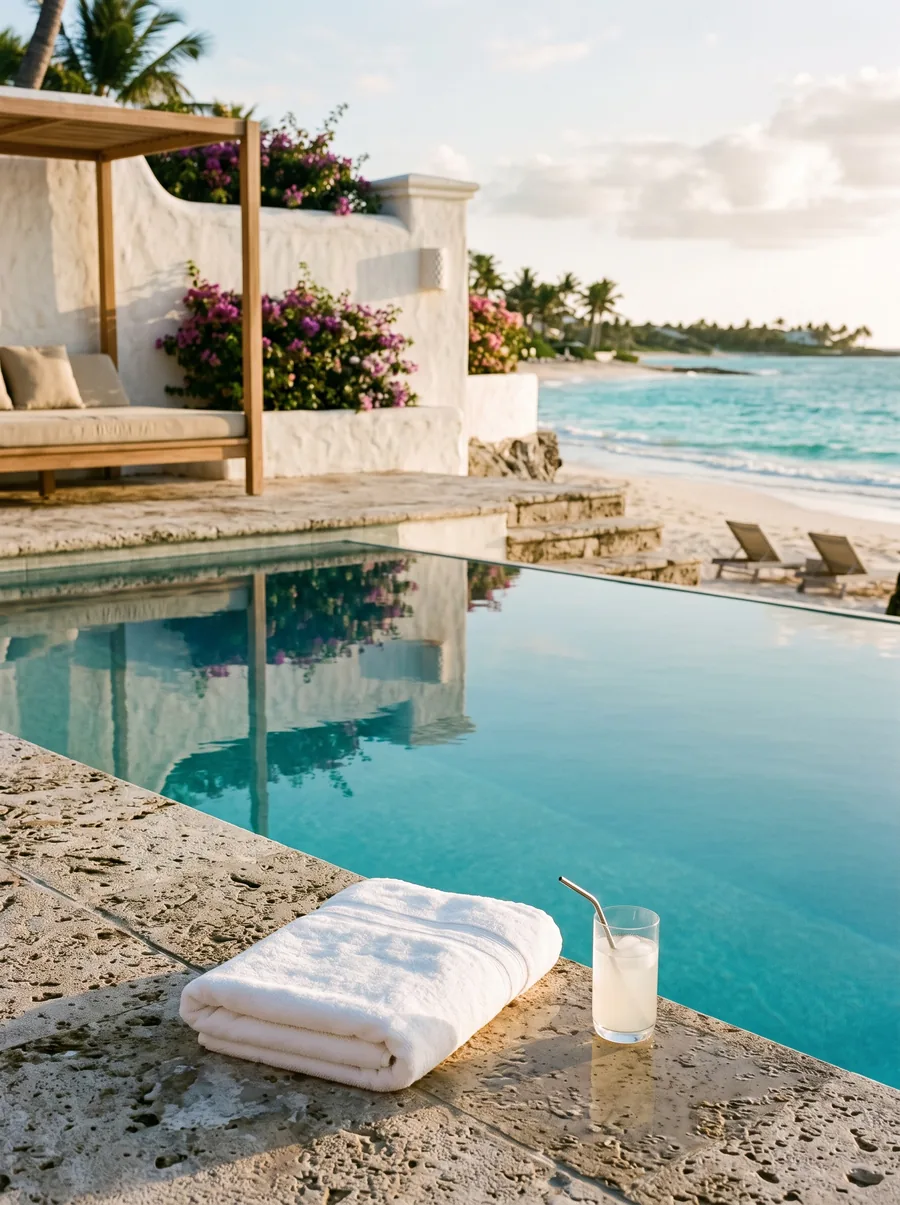
COMO Parrot Cay in the Turks and Caicos shows the shape at its best. The island has a single resort on it, and the resort arranges the whole journey: 15 minutes by car from Providenciales airport to Leeward Marina, then 35 minutes by private boat, about 50 minutes in all. Two vehicles, one arrangement and one place to call if the flight is late.
Run by the hotel, or merely arranged
A transfer the hotel runs uses its own people and often its own vehicle: the driver or skipper works for the house, knows your name and flight number, and answers to the manager. A transfer the hotel arranges is booked with an outside company, a boat operator or an airline, and the hotel's part may end with the reservation. The second kind can work perfectly well. The difference shows when your flight lands three hours late: one driver has been told to wait, the other may have finished the shift. Ask three plain questions. Whose staff will meet me? Who pays if the connection is missed? Which number do I call at two in the morning?
Kudadoo Maldives Private Island combines the two. The resort's own team meets you at Velana airport in Malé and looks after you in its lounge; the seaplane north to the Lhaviyani Atoll, about 40 minutes, is booked by the resort, lands beside the jetty and is charged on top of the rate. A sensible division: people on the ground you can hold to account, and a seat in the air booked for you. Ask for the seaplane price when you book, since it is not included.

Timing, daylight and night arrivals
Island connections keep their own clock. Seaplanes in the Maldives fly in daylight only, so an evening landing in Malé can mean a night near the airport before the last leg. Boats may not cross after dark or in a heavy swell, and small airlines fly to timetables that do not wait for a delayed long-haul flight. Before you buy the international ticket, ask the hotel for the latest landing time that still makes the same-day connection, then leave a margin for immigration and baggage.
If you will land at night anyway, decide in advance rather than at the carousel. Book a room near the airport for the first night and ask the hotel to move the transfer to the morning. Where a car can make the journey after dark, ask whether the driver is the hotel's own or a contractor, and get a mobile number that is answered, by call or message, at the hour you land.
Luggage on small aircraft
Seaplanes and light aircraft weigh everything, the bags and sometimes the passengers too, and their allowances are usually lower than on a long-haul flight. Excess can be charged or left behind for a later flight. Soft bags fit small holds more easily than hard cases, and it is worth asking whether you can leave a suitcase at the airport or with a partner hotel on the main island.
Bird Island Lodge in the Seychelles combines both constraints. The lodge books a scheduled light aircraft from Mahé, about 30 minutes for the 105 kilometres, and bills it with the stay. The flight allows 15 kilograms of checked luggage per person and operates only on Mondays and Fridays, so if you miss the Friday departure, the next scheduled one leaves on Monday. Pack for the island rather than the whole trip, plan three or four nights around the flight days, and fit the international flights to them, not the other way round.

In the city, too
In a large city the hotel's own transport can be the best way through the traffic every day of the stay, not only on arrival. The Siam in Bangkok, in the old royal district of Dusit, runs its own boat, free of charge, between its private pier and Sathorn Central Pier beside the Skytrain; the Grand Palace, Chinatown and the Old Town all lie along the river between the two piers. For the airport, the hotel arranges a limousine from Suvarnabhumi, about 35 kilometres and 45 to 60 minutes depending on traffic. Book it with your flight number, and keep the boat for the days in town.

What to confirm in writing
Before you travel, ask the hotel to confirm in one email:
- who operates each leg, and whose staff meet you on arrival
- the meeting point, and the name on the sign
- the price, whether it is per person or per vehicle, and whether the return is included
- what happens if your flight is delayed, and until what hour the connection runs
- the luggage allowance per person on each leg
- a telephone number that is answered at the hour you land
Send your flight numbers as soon as you have them, and again after any change. A hotel that replies with a name and a time rather than a general assurance usually knows what to do about a missed connection, and that is the hotel you want at the far end of a long day.