Almost every hotel now calls itself sustainable. The word sits beside a card asking you to reuse your towel, a bamboo toothbrush in the bathroom and a photograph of a vegetable bed, and it tells you nothing about how the place is actually run. The difference between a programme and a slogan rarely shows on a booking page, but it appears quickly once you ask the right questions. A hotel that has changed its operations answers with names, numbers and dates. A hotel that has changed only its brochure answers with adjectives.
Who certified it, and who checks
Start with the paperwork and sort it into three piles. A certificate means an outside body has audited the hotel against published criteria. A membership of a network or association may or may not involve an assessment, so ask which applies. An award or a place on a magazine list means editors liked the place, which is pleasant and proves little. Then ask four things about any certificate: which scheme, which level, who awards it and when the last audit took place. A label that a hotel group designed itself and awards through its own sustainability department is a policy, not a certificate.
Pacuare Lodge in Costa Rica answers in a single breath. It names its certification, Costa Rica's CST at Elite level, alongside an Ecological Blue Flag and membership of The Long Run, and then gets specific. Power comes from three hydro turbines and a bank of solar panels, which is why hair dryers stay at home. The lodge protects roughly 840 acres of primary forest and has supported jaguar camera research with the National University since 2009. Every claim carries a name, a number or a date, and that is the pattern to look for.
Where the power and water come from
Energy is the easiest claim to test, because generation is physical. Ask how much of the electricity is produced on site and what happens when it runs short; a lodge with its own turbines or panels can tell you, and a city hotel that buys renewable power should at least name its supplier. Ask how the rooms are cooled or heated, since shade, thick walls, cross ventilation and ceiling fans reduce how hard any air conditioning has to work. Water comes next, and in dry regions it matters more: where does it come from, is rain collected, and is grey water reused or simply piped away?
At Jetwing Vil Uyana near Sigiriya in Sri Lanka, the hotel is itself a water system. In 2004 Jetwing took on 28 acres of exhausted paddy land, and the environmental architect Sunela Jayewardene dug lakes and channels and replanted marsh and forest before setting 36 dwellings among them. The lakes are filled entirely by harvested rainwater, wastewater is reused on the grounds, and a biogas plant turns the kitchen's food waste into gas. The dwellings are cooled by their position over water and by thick clay plaster rather than by machines alone, and the buggies on the paths are electric. A place on a 2023 magazine list of the world's best eco hotels is flattering; the more than 140 bird species recorded in the reserve are the stronger evidence.

What comes in, and what goes out
Follow the goods. Ask which farms and fishermen supply the kitchen and whether the menu names them, who made the furniture and where the soap comes from. Then ask where the rubbish goes. Composting kitchen scraps, serving filtered water instead of bottles and refusing single-use plastic from suppliers are the basic steps. On an island or at the end of a dirt road, whatever is not composted or reused has to be shipped out or dealt with on site, and a hotel that has thought about it will tell you exactly how.
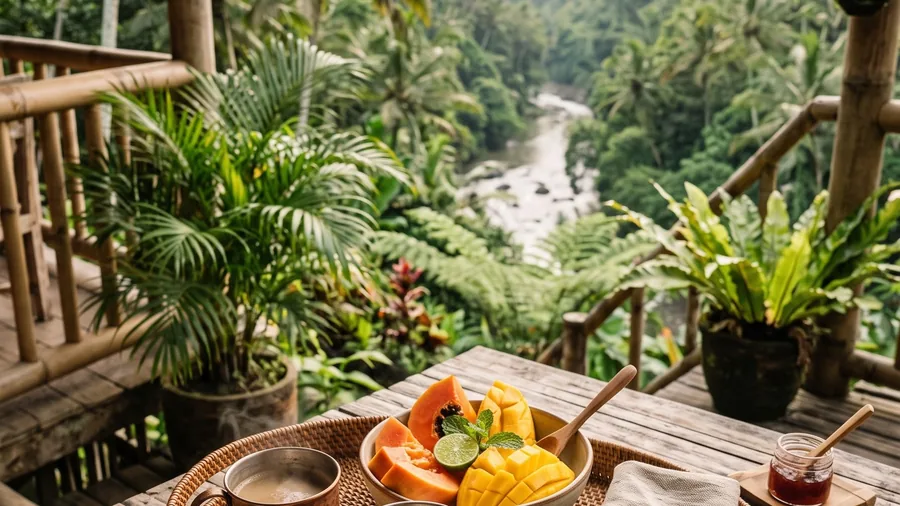
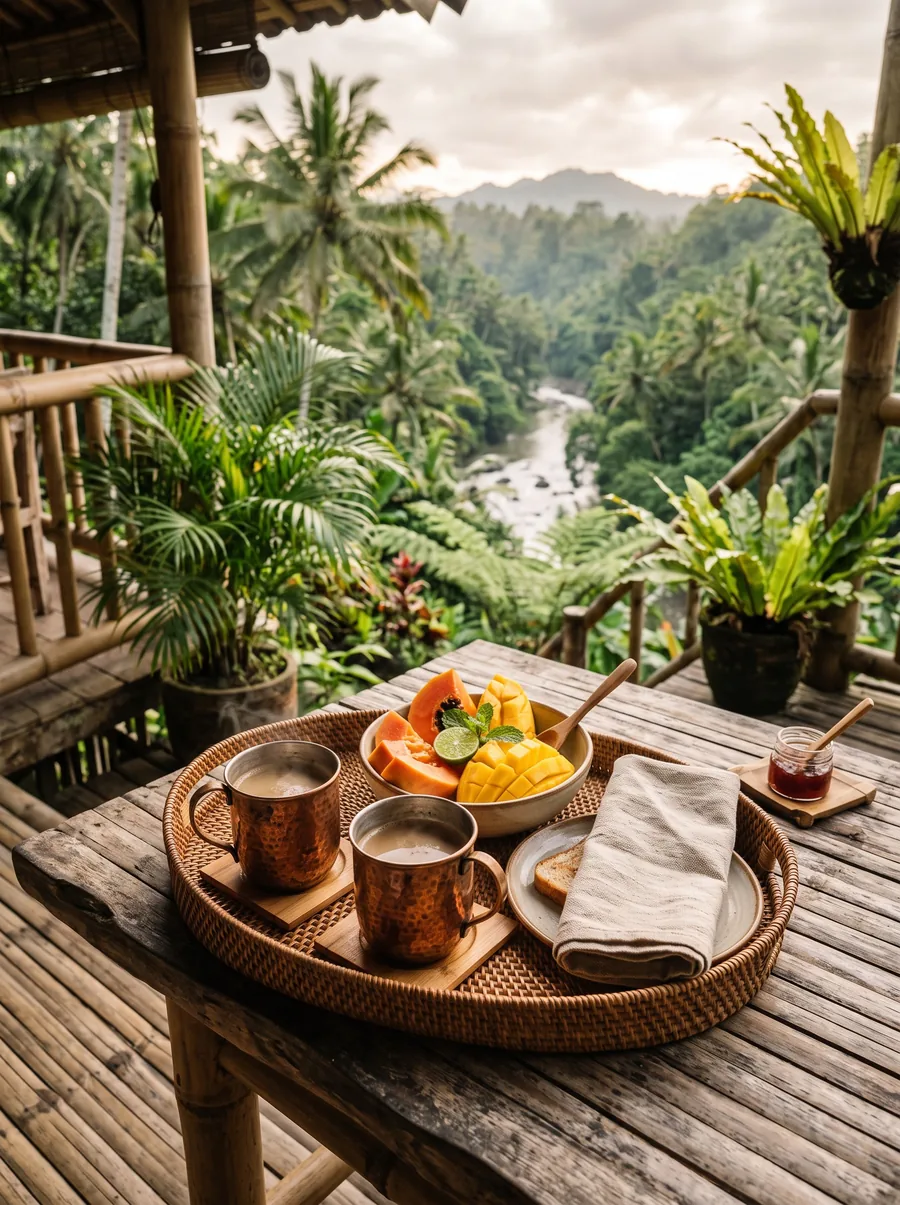
Bambu Indah, on the Sayan ridge above the Ayung River outside Ubud, shows both halves. John and Cynthia Hardy began in 2005 by shipping eleven antique Javanese bridal houses to Bali and restoring their carved teak; the newer houses are built of bamboo. Vegetables come from the permaculture garden and mushrooms from the farm on site, local craftsmen hammered the copper fittings, and rice paddies have been restored. Waste is composted, and there is no single-use plastic. Even the cooling is modest: beds sit under air-conditioned canopies rather than in a chilled room. Guests are invited on the seven o'clock village walk and, in season, to join the rice harvest.
Who works there, and what you are asked to do
Two more questions show how deep a programme goes. The first is about people: how many of the staff come from the surrounding area, and do local people run departments or only tend the gardens? A hotel that hires, trains and promotes locally keeps its wages in the place. The second is about you. A real programme asks something of guests beyond reusing a towel, whether that means living without air conditioning, keeping lights off at night or joining the monitoring, and it explains why.
Bird Island Lodge in the Seychelles makes both points plainly. The Savy family bought the island in 1967, when guano mining and coconut planting had reduced the sooty tern colony to a fraction of its former size. The lodge has kept a local staff policy for more than forty years; it heats its water with the sun and does without air conditioning, television and outdoor light after dark, so that turtles and shearwaters are left alone. Big game fishing was stopped in 2017, and between October and March guests can help the monitoring team record the hawksbill turtles that come ashore on the west coast.

Five questions to send before you book
- Which certification do you hold, at what level, who awarded it and when was the last audit?
- How much of your electricity and hot water do you produce yourselves, and how are the rooms cooled?
- Where does your water come from, and what happens to grey water?
- Which farms, fishermen and craftspeople do you buy from, and how many of your managers come from the area?
- What happens to food waste and plastic, and what will you ask of me during my stay?
A hotel with a programme answers within a day, with names and numbers, and often sounds pleased to be asked. A hotel with a slogan sends a link to a page of adjectives.